Reviews

Desire by Molly Peacock Poem Analysis

In the poem “Desire” by Molly Peacock, the author displays the uncontrollability of desire through imagery of aromatic incense. It can be assumed, since the poem’s title is “Desire,” that Peacock is describing the attributes of desire. In the lines, “It is the blind instinct for life unruled, / visceral frankincense and animal myrrh,” the author points out desire’s instinct-like behavior by comparing it to incense. Instinct is a feeling or action unguided by rational thought. Similarly, the path that the smoke from incense takes is completely unpredictable, and doesn’t flow straight up, or in any orderly fashion. This unpredictability is also supported in the lines, “It is…without the details of time’s experienced part- / fit-into-part-fit-into-part,” by emphasizing that desire does not follow the strict routine of time, and can do whatever it pleases. By saying desire is similar to “visceral frankincense and animal myrrh,” the author not only displays the pleasant feeling of desire by comparing it to the sweet aroma of incense, but also the uncontrollable nature of desire, like the smoke of incense.


Peacock also characterizes desire as an animal, or a pet to show how it can see past intellectual thought to reach the human’s simplest feelings of want. In the lines “It is…like a pet who knows you and nudges your knee with its snout,” the author compares desire to a familiar pet. From the action of “[nudging] your knee with its snout,” it seems to be using its nose to tell its owner something. Dogs, as an example, have a very good sense of smell; they’re able to detect many objects, actions, and even feelings before a human can. Perhaps the detection of feelings grows stronger the closer the pet is to its owner. The poem hints that desire is like a pet, though it acts off of instinct; it knows what the owner wants, even if, through rational thought, the owner disagrees. The author plays with the idea of listening to the human instinct without rational intervention, something that a pet is able to sense through. Even in the first line, “It doesn’t speak and it isn’t schooled, / like a small foetal animal with wettened fur,” it’s clear that desire is like an animal, not limited by complex thoughts, and makes decisions based purely off of survival instinct (e.g. a baby animal freezing with wet fur would do the first thing needed to survive) In the last lines, “[It’s] the drive for what is real, / deeper than the brain’s detail: the drive to feel,” Peacock really emphasizes the meaning of desire: something humans feel that’s not controlled by rational thought. From using examples of desire being like an animal, the author further conveys the ability of desire to know what its human really wants without rational intervention.

Posted by Euphoria Yang in Analysis, 0 comments

Edna St. Vincent Millay Poem Analysis (Four Sonnets, 1922)

In Edna St. Vincent Millay’s poem, she uses metaphors to display her reliance on her fiance. In the lines, “Were you not still my hunger’s rarest food, / and water ever to my wildest thirst, / I would desert you,” the speaker notes that she doesn’t leave her fiance only because she’s dependent on him. She points out two key needs of survival: food and water. When a man is full of hunger, the reason he is starving is because he has limited access to food, or in other words, food is rare. By comparing her fiance to “hunger’s rarest food,” she emphasizes how important he is to her survival. Similarly, she also describes him as “water ever to my wildest thirst,” characterising him as another necessity for survival. Humans can live without food for over several weeks, but the body cannot support itself over a couple days without water. Since water is held at a higher demand for survival than food, having this line written immediately after the food metaphor, further signifies his importance to her survival. Although it’s not specified how he benefits her survival, whether that be financial stability, or elevated status of class, it’s clear that without him, she wouldn’t live a comfortable life through the metaphors she uses.

Posted by Euphoria Yang in Analysis, 0 comments

Secretly I Am Building In The Heart Analysis

Secretly I Am Building In The HeartIn the poem “Secretly I am building in the heart” by Julia Alvarez, the speaker attempts to rebuild a structure made out of love, the idea of which is emphasized through ambiguity, endurance, and maintenance. With the use of vague diction, clear metaphors, and reflection, the speaker further denotes the significance of love.


Using ambiguous wording, the speaker presents love as something universal rather than limited to one person or object. This idea is conveyed in the final line, “I’ve / labored with my heart to outlast the heart / with this thing I’m creating out of love.” The speaker stresses the emotional labor behind the structure by “labor[ing] with [their heart],” but they never define what the creation actually is. Through referring to the structure as a “…thing,” and not specifying the shape it’s taking, this ambiguity allows the structure to represent any form of love. Also, the speaker’s desire to create something “…to outlast the heart” shows that love is expected to live longer than the heart but it’s not specified how. With the word “heart,” something that is associated with emotion, the speaker suggests that love is meant to exist past emotional impulse. By leaving this object of love indeterminate, the speaker suggests that love itself is not bound to a single purpose but can be applied wherever.


The speaker’s actions then reveal how much they value love, shown through the metaphor of building  “…card houses or Popsicle palaces / kids build.” Cardhouses and Popsicle places are known to be frail, and the speaker conveys the fragility of the creation by relating their structure to those easily destroyed ones. Yet though this structure is delicate, the speaker has the persistence required to build it carefully. By “…patiently piecing each part together,” the speaker highlights the time, effort, and focus invested in the structure, emphasizing that love is worth lots of labor despite its delicacy. Furthermore, the speaker admits that this process “…takes so much time,” reinforcing that building this is not a casual or effortless project. Also, the speaker works with the “…ruins from an earlier effort,” continuing to rebuild it rather than quitting and abandoning the structure altogether. The perseverance in these actions demonstrates that love has great importance to the speaker. 


Not only is love important, but the speaker also points out that love requires continuous maintenance. This is shown in the lines, “[A] new thing I am making that takes so much time / to finish if there’s finish in these things,” where the speaker reflects on the task and questions love’s finitude. By doubting “…if there’s finish in these things,” the speaker wonders whether there even is an end. Alongside thinking about a “readymade” alternative, the speaker questions whether the act of building love is worth the effort. However, in the last two lines, they then accept love as an ongoing process that demands consistent labor and care. The structure the speaker builds is not infinite because it’s unbreakable, but because it must be continually tended to. The speaker implies that love’s stability lies in its need for persistent nurture.


In “Secretly I am building in the heart,” love is described as an enduring object that requires care and precision. Through the speaker’s word choice, metaphors, and reflection, love is illustrated as a universal resource that continues to grow.

Posted by Euphoria Yang in Analysis, 0 comments

Sound and The Fury Analysis

The Sound and The Fury Book CoverIn The Sound and the Fury, William Faulkner uses nature imagery to explore the Compson family dynamics. Through trees, honeysuckle, and jimsonweed, Faulkner shows how rebellion, loss of innocence, and neglect define members of the family.


In the book, trees symbolize rebellion, freedom, and how the Compson women defy familial authority. When Caddy climbs the trees to peek at Damuddy’s funeral, her brothers and Versh immediately interjects, “‘Your paw told you to stay out that tree’” (45). Yet Caddy is not intimidated and invokes her father’s instruction that she be obeyed, displaying how she slyly escapes authority by working around the rules.Caddy climbs anyway, above everyone else, further emphasizing her defiance against her family. The tree she climbs is the first place where she shows that her desire for knowledge matters more than what the men in her family permit her to do. A generation later, Jason, echoing his father, prohibits his niece Quentin to sneak out, yet he is unsuccessful. Luster notes about her, “‘They come every night she can climb down that tree’” (50). This shows that Quentin’s climbing of the tree is much more frequent and consistent than Caddy’s, suggesting a greater range of freedom. Since Jason is the only one now that actively opposes her and Luster and Benjy simply watch as bystanders, Quentin is much more successful in her endeavors. The book vividly describes her actions through the lines, “It came out of Quentin’s window and climbed across into the tree. We watched the tree shaking” (74). Through this imagery, the shaking of the tree presents her rebellion in a physical way. For both Caddy and Quentin, the tree is the one place that the Compson family cannot reach, and each time the girls climb the tree, they are choosing freedom over the family’s restricting expectations. 


Faulkner also uses the smell of honeysuckle to show how Caddy’s loss of virginity affects Quentin. In their childhood, the smell was a part of the innocent world they lived in. Caddy saying, “You used to like it” (153), emphasizes the transformation Quentin underwent. Even though the smell didn’t change, things around it did. Caddy’s loss of virginity turns the honeysuckle from a reminder of innocent childhood into something Quentin relates to the shame of their family. Quentin thinks, “Liquid putrefaction like drowned things floating like pale rubber flabbily filled, getting the odor of honeysuckle all mixed up” (128). Here, the honeysuckle is associated with rotting and decay, suggesting that Quentin sees Caddy’s promiscuity as a kind of death. When she loses her virginity, Quentin enters a state of delirium and the honeysuckle represents this. When he says, “I had to pant to get any air at all out of that thick gray honeysuckle” (151), it implies that the scent is suffocating him, like a thick cloud of gray smoke. “Gray” could also describe how the warmth of honeysuckle was drained, the same way Caddy’s loss of innocence took away Quentin’s understanding of the world. When Quentin confesses, “Honeysuckle was the saddest odor of all, I think” (169), his transformation is complete. Honeysuckle, a simple pleasant smell from childhood, is now a constant painful reminder of his once pure Caddy Compson.


Jimsonweed, a toxic and hallucinogenic plant, is used to show how poorly Benjy is treated and that his distorted perception of reality could be caused by something other than his cognitive disability. At first, Luster hands jimsonweed to Benjy whenever he becomes distressed, saying, “Here’s you a jimson weed” (6), as a way of quieting him. He treats Benjy more like a chore to complete rather than a human being. But, when Dilsey confronts Luster after he knocks Benjy’s weeds over, he never mentions the jimsonweed at all, telling her that, “[Benjy] was playing with that bottle full of dogfennel and all of a sudden he started up bellering” (56). The replacement of jimsonweed with a different harmless plant shows how Luster tries to hide something that is hurting Benjy. This demonstrates the cruelty of his caretaking. The effects of the weed are also written directly into Benjy’s narration. Jimsonweed is known to cause hallucinations, disorientation, and an inability to differentiate between sleeping and waking. Benjy’s section hints at these symptoms. He repeatedly describes “bright shapes” moving across his vision, saying that “the dark began to go in smooth, bright shapes, like it always does, even when Caddy says that I have been asleep” (75). The phrase “even when Caddy says that I have been asleep” implies that he is unable to distinguish his dreams from reality. The wheel imagery of “bright tops of wheels” (11) reflects blurred vision and confusion, symptoms associated with jimsonweed toxicity, hidden in his abstract stream of consciousness. At the end of the book, the broken flower that “drooped over Ben’s fist” (321) while “his eyes were empty and blue and serene” (321) shows an image of vacancy in his mind, and this dissociation points to the effects of jimsonweed. These details suggest that Benjy’s confusing narration is due to not only his disability, but the exposure to a toxic plant that nobody seems concerned about removing from his hands. 


Through trees, honeysuckle, and jimsonweed, Faulkner uses the natural world to display key issues in the family. Rebellion, lost innocence, and neglect are themes that define each member of the family and ultimately contribute to their fate.

Posted by Euphoria Yang in Analysis, 0 comments
Deep Sky

Deep Sky

by Yume Kitasei

Deep Sky by Yume Kitasei book coverIn my Instagram (@eveslistofficial) short video, I summarized this book as a hybrid between Harry Potter’s training in Hogwarts and competition and comradery of Hunger Games, two of my favorite series, all set in space. Here’s a deep dive into the Deep Sky: 

I never thought I was a fan of space until I read this book. The combination of paranoia, deception, and the ever-lasting search for acceptance made a great theme for this science-fiction. The story follows our main character, Asuka, a girl who has been recruited onto a mission to start a new life on a new planet called Planet X. The first chapter takes off with Asuka being asked to do a spacewalk to investigate a strange object on the side of the spaceship. As she comes closer, there’s an explosion. Just a few months after waking up from ten years of sleep, three people are dead, and Asuka is going to find out who is the traitor. Throughout the book, our perspectives on Asuka change as we see flashbacks up to ten years before takeoff. These little pieces of Asuka’s life let us observe her as a changing girl and learn some things that actually help Asuka in the end.

One of the things I loved about this book was how engaging the plot was. The turn of events kept my eyes glued to the page. Whenever they accused someone new, I was left on the edge of suspense as I kept reading, trying to figure out if they’re really the culprits. When Luis, Asuka’s brother, died, the author was subtly hinting that he had drowned while playing with his virtual reality. That set Asuka’s goal clear; she was going to space for Luis.

I think that this book is for young adults, like me, mainly because Asuka starts training for the program at twelve, and we get to see her grow up throughout the book. I was a little bit disappointed in the fact that we didn’t really see much character growth in Asuka until the very last few chapters of the book. She had the same attitude leaving her mother for the training as she did ten years later leaving for outer space. That was why when I first started reading the book, I kept on thinking that Asuka was 12 in space when she was actually 22, but technically 32 because of the decade long hibernation they did.

I also liked this book because it gave insights into the many struggles of interracial kids. Asuka wanted to find a balance between both nationalities (American and Japanese) but her mom’s enduring attitude to wanting her to be more Japanese made the relationship between them even  more distant. We learned that Asuka appreciates Japanese culture, but being able to speak very little Japanese and having only lived in Japan for a year, she felt out of place when meeting the other Japanese candidates.

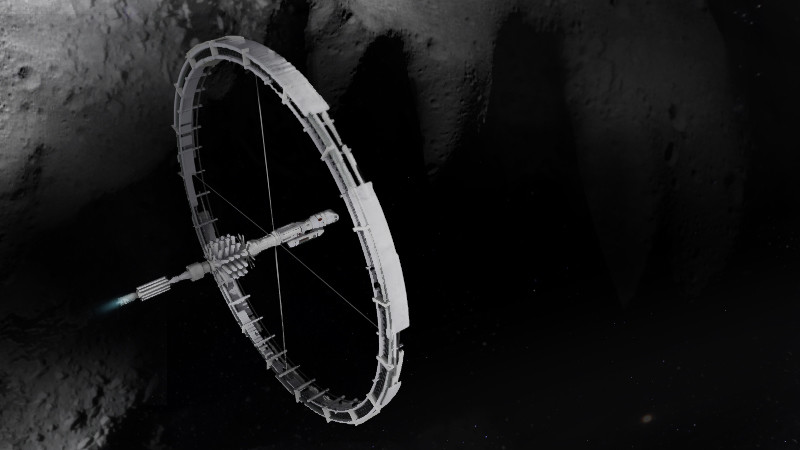
There was a reason I’ve always been not too fond of space: the risks you had to take. The space wheel in this book was knocked off course and everyone was set for a life wandering in vacuum until death. But, Asuka took a risk and told everyone to blow an explosive on the other side, to straighten the ship back up again. I realized you had to take risks, and if you’re trained well enough to do them, you will most likely succeed. It’s better to try and stay alive than to accept your fate. I recommend this book because I had such a fun time reading it, and I hope you will too. 

Posted by Hellen in Books, Reviews, 0 comments
Dragon Hoops

Dragon Hoops

by Gene Luen Yang

dragon hoops by Gene Luen Yang book coverThe last time I read a graphic novel was in 6th grade.You could imagine the excitement I felt opening this book, thinking it was a boring novel with no pictures, to a page full of colored panels. The story is a narration provided by the author, Gene Luen Yang, documenting the magic of basketball. It takes place in a private high school in California, whose basketball teams are supposedly one of the best in the entire state. As a young boy, Gene never had any strong likings to any sports that require balls; he liked writing comics and stories much more. Now as a math teacher, one day he overhears his students talking about the new selected members of the boys basketball team. He couldn’t understand why people loved watching and discussing people throwing balls in hoops. When he decides that his next book will be about basketball at his school, he takes it upon himself to accompany the team to all their scrimmages, games, and eventually, the state championships.

I love reading graphic novels. I really liked the author’s art style. It’s cartoonish (gives a kiddish vibe), while also being able to adhere to more serious circumstances if needed. The colors are vibrant and aesthetically pleasing, which is helpful for keeping the mood light and happy. The author also had a segment where he drew a kid’s hair a certain way to emphasize that the kid was Punjabi, not African American. 

The book also touches on some topics such as racism and sexism, things that the old and new high school players faced. For example, it brings light onto the discrimination experienced by female basketball players when basketball was first invented as well as the discrimination the first few Chinese basketball players faced. I liked how we get to learn more about individual players and we see how each player adds to the team, eventually making one of the best high school teams.

I recommend this book to young and grown adults, mainly because of the very grown-up problems that our main character faces. How will he balance teaching, drawing, and family?

I played basketball once in elementary school and I wasn’t very good at it. When I was reading this book, I realized how interesting basketball was and I was inspired to learn more about basketball by doing a little bit of research online. I even went to the gym to practice shooting some hoops; most of which I didn’t make, but it doesn’t matter.

Posted by Hellen in Books, Reviews, 0 comments
The Outsiders

The Outsiders

by S. E. Hinton

The Outsiders by SE Hinton book cover

The Outsiders by S. E. Hinton is about the rivalry between two groups on opposite ends in the spectrum of wealth. Ponyboy, our narrator, leads us through two weeks of his life where he contemplates the difference between right and wrong in society. The Greasers, which he is a part of, is a poverty stricken group of boys ranging from adolescents to young adults in age. The Socials or the “Socs”, are a generalization of the wealthy teenagers living on the other side of town.

When the rumor spreads that Ponyboy and Johnny were with girl Socs, the girls’ boyfriends decide to take revenge.They pull up to Ponyboy and start beating him and his friend up, but Johnny had a pocket knife and accidentally killed someone. They run away and deliberate whether or not they should turn themselves in. 

I really liked how many meanings this book could take on. Since I read this with my class as an assignment (which was one of the few I enjoyed), we had to analyze and explain what the theme or moral of the story was. When it was time to share, each of us (there’s around 30) had different answers, some following the same path, while some were in another destination. For example, I said that innocence will eventually leave our worlds as we grow older. My friend, Meher, said that you should enjoy things in life when you experience them, referring to Johnny’s regret.

Hinton’s style of writing was also very intriguing. For example, in the beginning, you think that this was a narrative (it is) presently spoken but in the end, it’s revealed that this was a thesis book thingamabob Ponyboy wrote for English. I liked how the beginning and end end with the same phrase, showing that mistakes and events can happen again, but what changes is your perception of it.

I also liked how she included a poem from  Robert Frost that gives this book its overall distinguished motif. “Nothing Gold Can Stay” is about how special the season of spring is and how even special things can’t stay forever. This can take on many meanings as well.

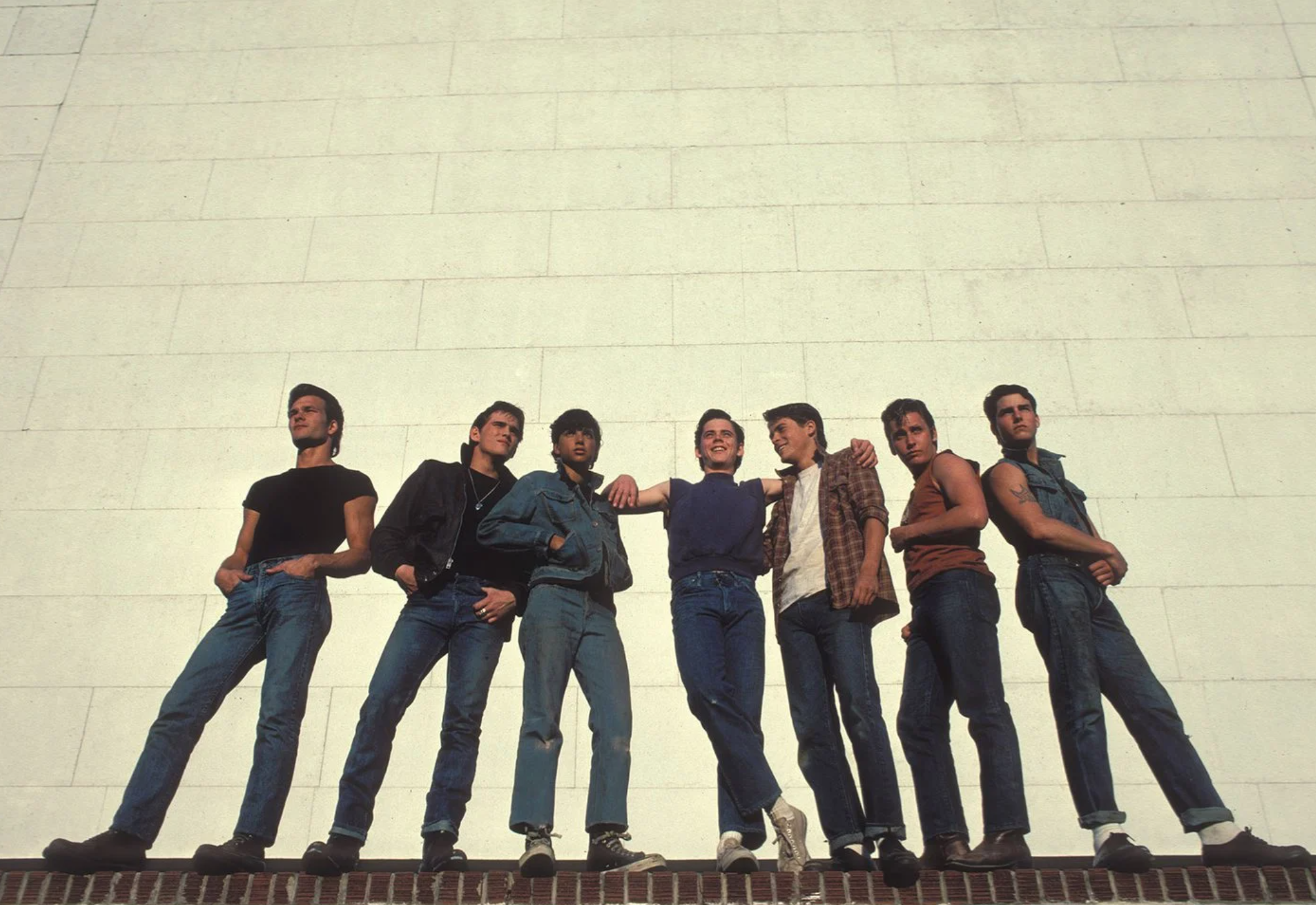
I would recommend this book to young adults, but older people can still enjoy it. In the movie based on this book, it had many actors who are very famous now and lets you see where they started and how much they’ve improved.

Posted by Euphoria Yang in Books, Reviews, 0 comments
Three books I read recently and why I liked them

Three books I read recently and why I liked them

I was asked about some books I read recently on a high school application. Here are my answers:

book cover Life as We Knew It

Life As We Knew It by Susan Beth Pfeffer. I read this dystopian novel and three other books in the series for literature class this semester. The story was surreally close to our world right now. It describes a lockdown triggered by a natural disaster. The characters’ experiences and emotional reactions were very relatable. A lesson I learned is that even when the entire world is bleak and desolate, you can find a community that accepts and helps you. Another lesson I learned from one of the characters is that if you are bold enough to persevere, then everything will work in your favor.


Educated by Tara Westover book cover

Educated by Tara Westover. I first read the book a couple years ago and recently reread it as I am thinking about my own education going forward. Initially, I was shocked by the “weirdness” of Tara’s family and impressed by how she broke the boundaries and escaped. Then I started to realize that choices all have consequences. It taught me to value every opportunity for education and do my best. 


Cloud Cuckoo Land book cover

Cloud Cuckoo Land by Anthony Doerr. I’m reading this novel right now. The story is very captivating as it is told from multiple perspectives over thousands of years from ancient Greece to the space age future. I learned that knowledge is precious. It takes a lot of low-probability events to line up for knowledge to survive history. The book touches on many issues concerning our world today, like climate change, poverty, virtual reality and AI, and social isolation. I haven’t finished the book yet, but I look forward to seeing what happens at the end.

Posted by Euphoria Yang in Books, Reviews, 0 comments
Life as We Knew It

Life as We Knew It

by Susan Beth Pfeffer 

book cover Life as We Knew ItI read a dystopian novel series recently, called Life as We Knew It by Susan Beth Pfeffer. I thought it was very interesting because it is very close to our world right now. It’s about a girl living in the present day Earth, and an asteroid knocks the moon off course. This causes abnormal tides and tsunamis and volcanic eruptions. Everyone stays at home since the ash from the volcanoes is filling the air. 

I found these books interesting because this was very much like our life during the pandemic, when we had to quarantine. Clouds of ash block the sun, and Earth is thrown into an early winter. Electricity is down, crops die and diseases spread. Miranda’s friends either leave their Pennsylvania town, hoping to find a better life by heading south, or die of starvation. As snow comes early, the family eats one meal a day, trying to conserve their decreasing supply of canned foods until things improve.

I think that this book is very good because it examines the human spirit during humanity’s lowest. There’s no happy ending, but there is a glimpse of hope which makes me want to read the next one. I believe the lesson we can take from this is maturity, growth, hope and family are the ingredients to survival.

Overall, this was a very good book. The next ones in the series are too.

Posted by Euphoria Yang in Books, Reviews, 0 comments